


 STFCN - Silk Natural Taffeta Chinese
















 Our textiles
When choosing a fabric, we often focus on its composition, color, or weave. These are, of course, very important aspects, but there is another parameter that has a huge impact on how the material behaves in practice: fabric weight.
It is this parameter that determines whether a fabric will be light and breathable or heavy, dense, and enveloping. What’s more, the same material can have completely different applications depending on its weight. In this article, we’ll explain exactly what fabric weight is and how to choose it for a specific project.
What Is Fabric Weight?
Fabric weight is a physical parameter that defines:
the mass of a fabric or knit per unit of surface area, most commonly expressed in grams per square meter (g/m² or GSM).
It is one of the fundamental characteristics used to describe a material, allowing for an objective comparison of its “heaviness” regardless of roll width or product form.
From a technological perspective, fabric weight indicates the amount of raw material (fiber) used to produce a given area of fabric, which directly translates into its performance properties. Materials with higher weight contain more fiber per surface area, making them typically thicker, denser, and more durable. In contrast, low-weight fabrics are lighter, thinner, and more breathable.
Fabric weight is closely related to other structural characteristics, such as:
- fiber type (e.g., linen, wool, silk),
- weave or knit density,
- yarn thickness,
- finishing processes.
In practice, this means that two fabrics with identical weight may feel completely different, one may be soft and fluid, while another is stiff and compact, depending on their construction and raw material.
How Does Fabric Weight Affect Fabric Properties?
Fabric weight directly influences how a material behaves during wear and use. It affects:
- Breathability – lighter fabrics usually allow better airflow, often due to a looser weave, making them ideal for summer and garments worn close to the body.
- Thermal insulation – heavier, denser materials retain heat better, making them suitable for colder weather and outerwear.
- Drape – low-weight fabrics tend to be softer and more fluid, while heavier ones are often stiffer and hold their shape better.
- Durability – higher weight is often associated with greater resistance to wear, although this also depends on fiber quality.
- Comfort – lightweight fabrics with looser weaves are more comfortable in warm weather, while heavier materials provide a pleasant sense of warmth in colder conditions.
Classification of Wool Fabrics by Weight
The classification of fabrics by weight is approximate (boundaries may vary slightly depending on the industry), but in practice, several basic categories are used. For wool fabrics, the following division can be applied:
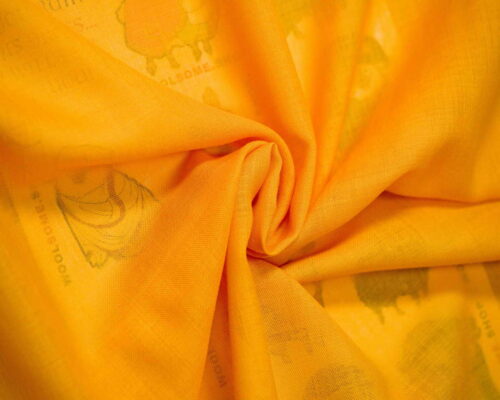
- Ultra-light wool fabrics (up to approx. 100 g/m²) – thin, delicate, and breathable, mainly used for accessories and decorative purposes.
- Very light fabrics (100–200 g/m²) – more durable while remaining lightweight, suitable for modern shirts or underwear.
- Light fabrics (200–300 g/m²) – ideal for summer clothing such as dresses, shirts, and tunics.
- Medium-weight fabrics (300–400 g/m²) – the most versatile group, excellent for historical reenactment, uniforms, and light coats.
- Heavy fabrics (400–700 g/m²) – thicker, denser, and more insulating, perfect for outerwear such as coats and cloaks. Fulled fabrics in this range can even be used for tents.


Linen Fabric Weight
It’s important to remember that the boundaries between these categories are fluid, and the final properties of a fabric depend not only on its weight but also on fiber type, weave, and finishing. The same weight range can produce very different results depending on the material.
For linen fabrics:
- Light linen (up to 200 g/m²) is suitable for underwear and shirts.
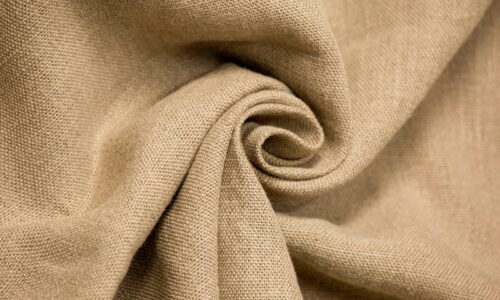
- Medium-weight linen (200–400 g/m²) is ideal for historical reenactment, closely matching archaeological finds from various periods, and works well for shirts, tunics, and doublets.
- Heavy linen (400–500 g/m²) is best for work trousers or even coats (often referred to as “parcianki”). When waxed or treated, it can also be used as tent canvas.


Silk Weight – Grams or Momme?
Silk weight is measured slightly differently. In addition to grams per square meter, silk is often described using momme (mm), a traditional unit in the silk industry (1 momme ≈ 4.3 g/m²). Momme refers to the weight of one pound of silk over a specific area (45 inches × 100 yards).
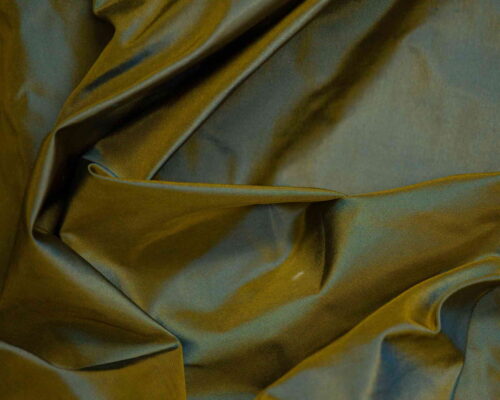
Silk weight typically ranges from about 40 to 200 g/m², though heavier variants also exist.
- Ultra-light silk (40–60 g/m² / 10–14 momme) – very thin, delicate, often semi-transparent; used for veils, scarves, and very light garments.
- Light silk (70–85 g/m² / 16–19 momme) – more versatile; still lightweight but can vary in drape depending on the weave; ideal for pajamas, nightwear, sleep caps, and light bedding.
- Medium-weight silk (95–108 g/m² / 22–25 momme) – more substantial and durable; commonly used for evening dresses, blouses, and structured garments.
- Heavy silk (over 120 g/m² / 28+ momme) – used for more structured clothing such as corsets or decorative items like cushions and upholstery fabrics.


How to Choose the Right Fabric Weight?
Choosing the right fabric weight is a key aspect of design, affecting both the aesthetics and functionality of the final product.
First, consider the intended use. For a summer dress or a formal shirt, a lighter, softer fabric is ideal. For an autumn version of a dress or an everyday shirt, a slightly heavier option may be more appropriate, offering both breathability and better thermal properties.
Fiber type and weave are also crucial. Linen remains breathable even at higher weights, wool can provide excellent insulation at relatively low weight, and silk combines lightness with strength and elegance. Fabric weight also influences drape: lighter materials are soft and flowing, while heavier ones hold their shape and create a more defined silhouette.
In historical reenactment, weight selection should also reflect the realities of the period. For a long time, heavier wool fabrics were used by lower social classes, while lighter, densely woven wool fabrics were considered luxurious and worn by those of higher status. The same applied to linen. Ultimately, the choice is a balance between function, comfort, visual effect, and historical accuracy.
Common Myths About Fabric Weight
Many simplifications and misconceptions surround fabric weight. Here are the most common ones:
- Does higher weight mean better quality?
No. Weight only indicates mass (g/m²), not fiber quality, weave, or finishing. High-quality fabrics can be both light and heavy. - Is a heavier fabric always warmer?
Not necessarily. Thermal properties depend primarily on fiber type and structure. Wool can be very warm even at low weight, while heavy silk satin may not provide much insulation. - Does low weight mean poor durability?
This is a myth. Lightweight fabrics are not inherently weak—silk, for example, can be very strong despite its low weight. - Is there one universal weight for all projects?
No. The right weight depends on the purpose, cut, season, and desired effect. What works for a shirt will not work for a coat. - Is weight the most important parameter when choosing fabric?
No. It is just one of many factors. Fiber type, weave, finishing, and how the fabric behaves in use are equally important.