


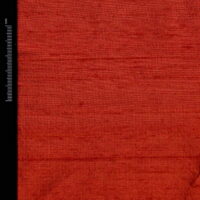
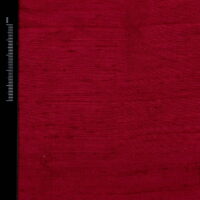
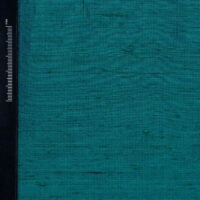
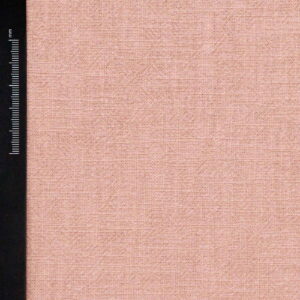
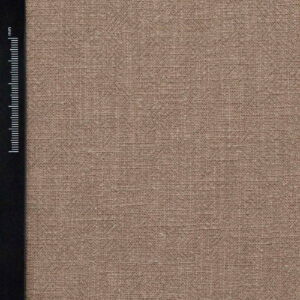
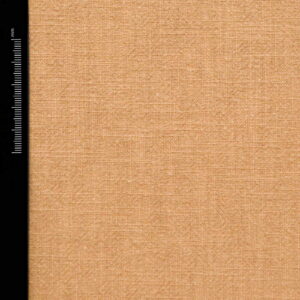
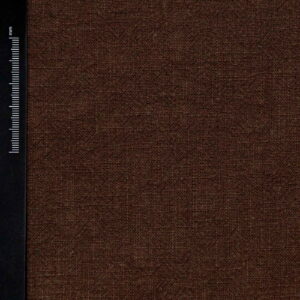
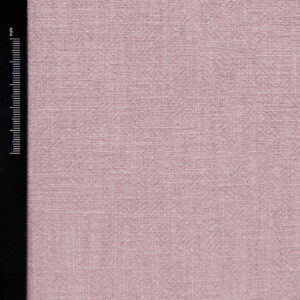
 STFCN - Silk Natural Taffeta Chinese
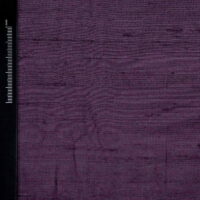
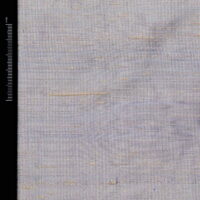
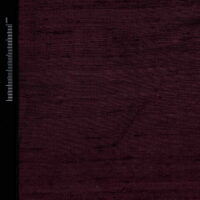

















 Our textiles
Ideas for new products
Whether it's a fresh colour addition to one of WoolSome's existing collections or an entirely new fabric quality, your input matters.
EXPLORE existing ideas, leave COMMENTS, and VOTE to indicate the level of demand for a particular new product.
Vote only for the ideas you believe you would consider purchasing from our store if they are produced. After voting, we’ll keep you informed about the idea’s future statuses.
While logging in is not required for voting, we still kindly ask for your email to facilitate communication with you.
While we are open for all ideas and discussions, please take into account that :
OPEN – first status after an idea is created, it is open for comments and votes.
REVIEWED – after reaching a certain treshold of votes, an idea will get our critical attention and we will speed up with the decision what to do. In most of the cases it will mean bringing an idea into production stage as quickly as possible.
APPROVED – after reviewing an idea a product will be produced.
DECLINED – after careful consideration, we’ve chosen not to proceed with the production of the idea. Additional insights and reasons will be shared in the final comment.
IN PRODUCTION – a status showing that the selected product is currently in the production phase.
COMPLETED – a product or a group of products are finally produced and delivered to our store. Links to these products will be provided in the last comment, so you can easier find them on our pages.
Vote only for the ideas you believe you would consider purchasing from our store if they are produced. After voting, we’ll keep you informed about the idea’s future statuses.
While logging in is not required for voting, we still kindly ask for your email to facilitate communication with you.
While we are open for all ideas and discussions, please take into account that :
OPEN – first status after an idea is created, it is open for comments and votes.
REVIEWED – after reaching a certain treshold of votes, an idea will get our critical attention and we will speed up with the decision what to do. In most of the cases it will mean bringing an idea into production stage as quickly as possible.
APPROVED – after reviewing an idea a product will be produced.
DECLINED – after careful consideration, we’ve chosen not to proceed with the production of the idea. Additional insights and reasons will be shared in the final comment.
IN PRODUCTION – a status showing that the selected product is currently in the production phase.
COMPLETED – a product or a group of products are finally produced and delivered to our store. Links to these products will be provided in the last comment, so you can easier find them on our pages.
- 29Hallstatt woolsThe fabrics from the salt mines are mainly woollen and some are of extraordinarily fine quality. These woollens were woven on warp-weighted looms that could produce not only a plain tabby but more com... Read more...
- 22Extra-Wide WoolWhen trying to recreate the Roman Toga, we run into a frequent issue. The toga was a very wide woolen garment, roughly 4 yards by 6 yards. Romans were able to achieve this with incredibly wide loo... Read more...
- 20Color chart based on historical dyes copyI would like a rethinked tint chart that offer wool colors base on historical dyes. Most of my reenactors friends are looking for tints that reflect what historical dyes could offer as primary and ... Read more...
- 162/1 twill wool2/1 twill appears in many cultures and periods. A wide variety of colors and weights in that weave would be most appreciated!
- 11More colours of linen threadMore shades of the linen threads would be great for better matching with different fabrics.
- 10Silk VelvetMedium heavy to heavy silk Velvet (or silk viskose velvet) for the reconstruction of 1870-1900 fancy dresses and coats. Not the light and "watery" Velvet from 1920 onwards. That would be awesome! Co... Read more...
- 8Worsted wool (Herdwick?)I have been testing many different types of wool and find that worsted wool is extremely effective for wind and water ressistance whilst being very light, however my problem is that there are not many... Read more...
- 8Wool broadclothWool broadcloth was used in medieval clothing from the 11th century onward, and is useful because when cut it doesn’t unravel. It would be great to have it in vibrant colors, especially those that are... Read more...
- 7FleeceSince there are already natural dyes and yarn, so why not sheep fleece from primitive breeds such as Soay, Icelandic, Shetland, Manx Loaghtan, Wrzosówka, or Świniarka. And I think it would be better i... Read more...
- 7White Thin Diamond from WQDWhite thin diamond or broken diamond weave wool in ca 200 g/sqm for dyeing. Small diamond size of 1 cm or in rhomboidal 1 x 1,5 cm. Something similar to the sample on the picture attached
- 6Vertical Stripes (Roman Clavi)One of the main limitations for recreating Roman attire from the Classical period is that the clavi stripes featured on the tunicae of higher class Romans were typically woven into the tunic on the lo... Read more...
- 4Wool from GieczThe raw material was not specified, but the warp (O) and weft (W) fibers - compared to other analyzes - belong to a coarser grade (0.039 [O] and 0.042 mm [W]), which guaranteed obtaining a "stronger" ... Read more...
- 4Checked Falkirk woolThe Falkirk tartan is what is known as a 2-over-2 weft-chevron twill. Undyed light brown and dark brown checked pattern from the 3rd century. https://falkirklocalhistory.club/wp-content/upload... Read more...
- 4Linen Herringbone WeaveI'd really love some good linen herringbone weave options as we already have some diamond weaves!
- 4GOTS or OEKO-TEX certified woolI think it could be useful to had a GOTS or OEKO-TEX certified wool (maybe in thin and/or medium weight) for people who try to be respectful towards the environment in their fabric consumption. I saw ... Read more...
- 4Emerald green/black (changeant/shot) silk satin or taffetaSo, basically, an emerald green (somewhere between RGB #047201 to #034601 would give you a good idea) silk woven with black silk. I've been looking for this kind of fabric everywhere, to no avail--it'... Read more...
- 4Broad StripesI really would like to see a fabric where those iconic thick stripes (as seen in this case in yellow and red) are present. It can be found in quite a few illustrations from the time but is nowhere t... Read more...
- 4LEG WRAPS!White, basic ones in herringbone or basic diagonal twill. Honestly, even plain twill would be perfect. My clients often ask me about some plantdyed leg wraps and I would love to have a good source of ... Read more...
- 4Nettle FabricIt's almost impossible to find pure fabric made of stinging nettle for neolithic reenactment.
- 3
- 3Silk brocadesI would really love to see some silk brocades in late medieval patterns for higher class impressions.
- 2
- 2Wool in satin weaveIts something between clasic wool fabrics and silk fabrics on period rich scale. It has a smooth shine and apears in sources in different names, for example "haras"
- 2Silk StripesI would love a selection of Striped Silks, in soft colours, like rose and green, ivory and blue, and so on. I do think it would bea hit with Rococo enthusiasts.
- 1Broad StripesI really would like to see a fabric where those iconic thick stripes (as seen in this case in yellow and red) are present. It can be found in quite a few illustrations from the time but is nowhere t... Read more...
- 1Mixed YarnsIn "Textiles and Clothing, c.1150-1450: Medieval Finds from Museum of London Excavations" by Francis Grew and Margrethe de Neergaard, they reference several examples of fabrics that combine different ... Read more...