



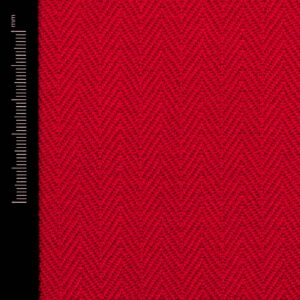
 STFCN - Silk Natural Taffeta Chinese











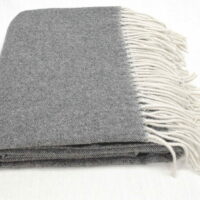
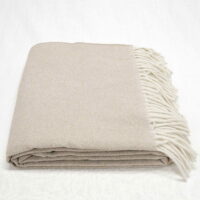




 Our textiles
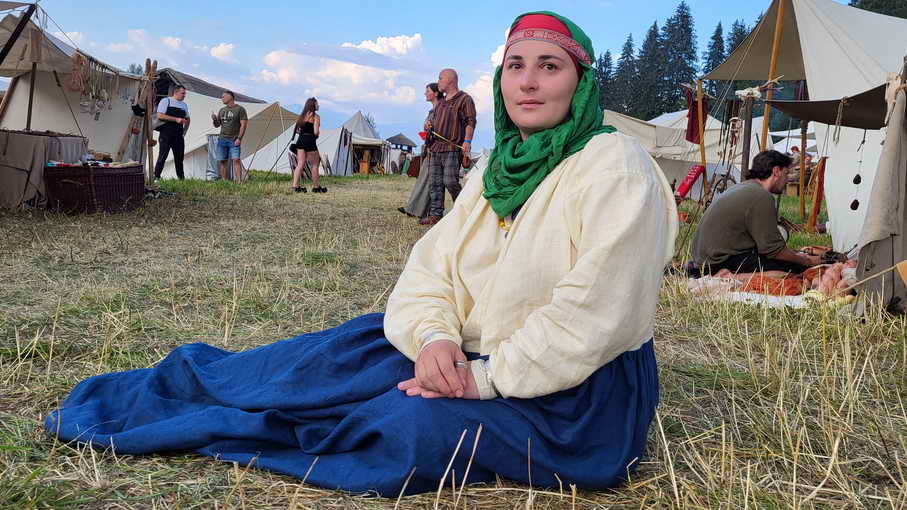
Welcome to the “Kram oŻywione” — a place where the garments of centuries past come alive in every stitch and shade, and where every finished outfit is personally approved by the Feline Quality Control!
I’m Ilka, a historical reenactor fascinated by the early Middle Ages. I recreate clothing dated to the 9th–11th centuries from the regions of Kievan Rus’ and Scandinavia, though I’m not afraid to venture into other areas and eras. I’m constantly expanding my base of sources and academic studies so that I can not only craft garments with solid historical grounding, but also advise on cut, color, and overall design.
As a seamstress, dyer, and spinner, I put great care into every detail to capture the spirit of the period. For the past five years, I’ve worked in the Kraków-based reenactment group Wotczina Raróg, so I’m well acquainted with the everyday choices and challenges reenactors face. I’m always ready to collaborate in a way that ensures your outfit is beautiful, accurate, and doesn’t leave a gaping hole in your coin pouch!
The Gnezdovo Dress – a wealthy outfit for a Scandinavian woman
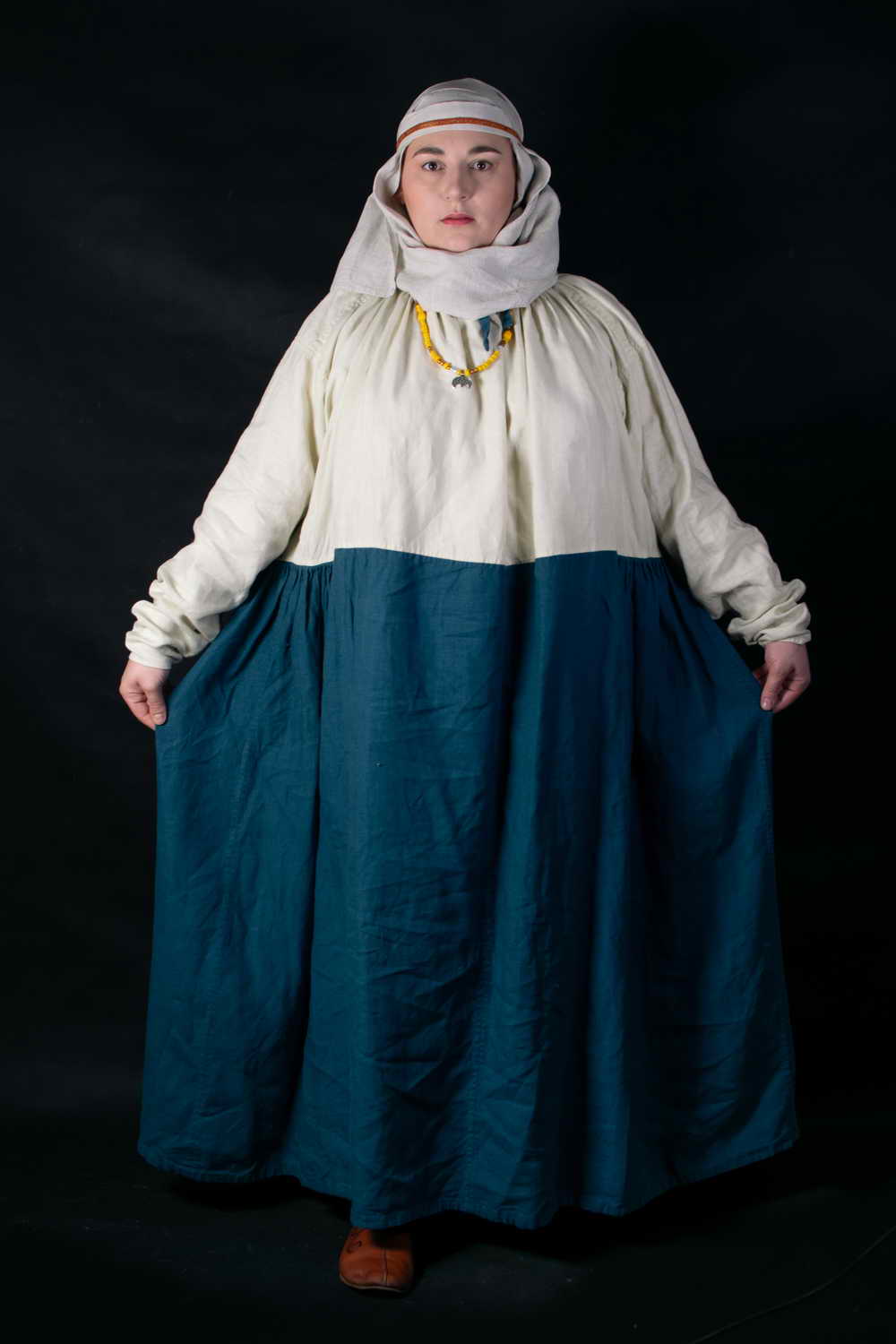
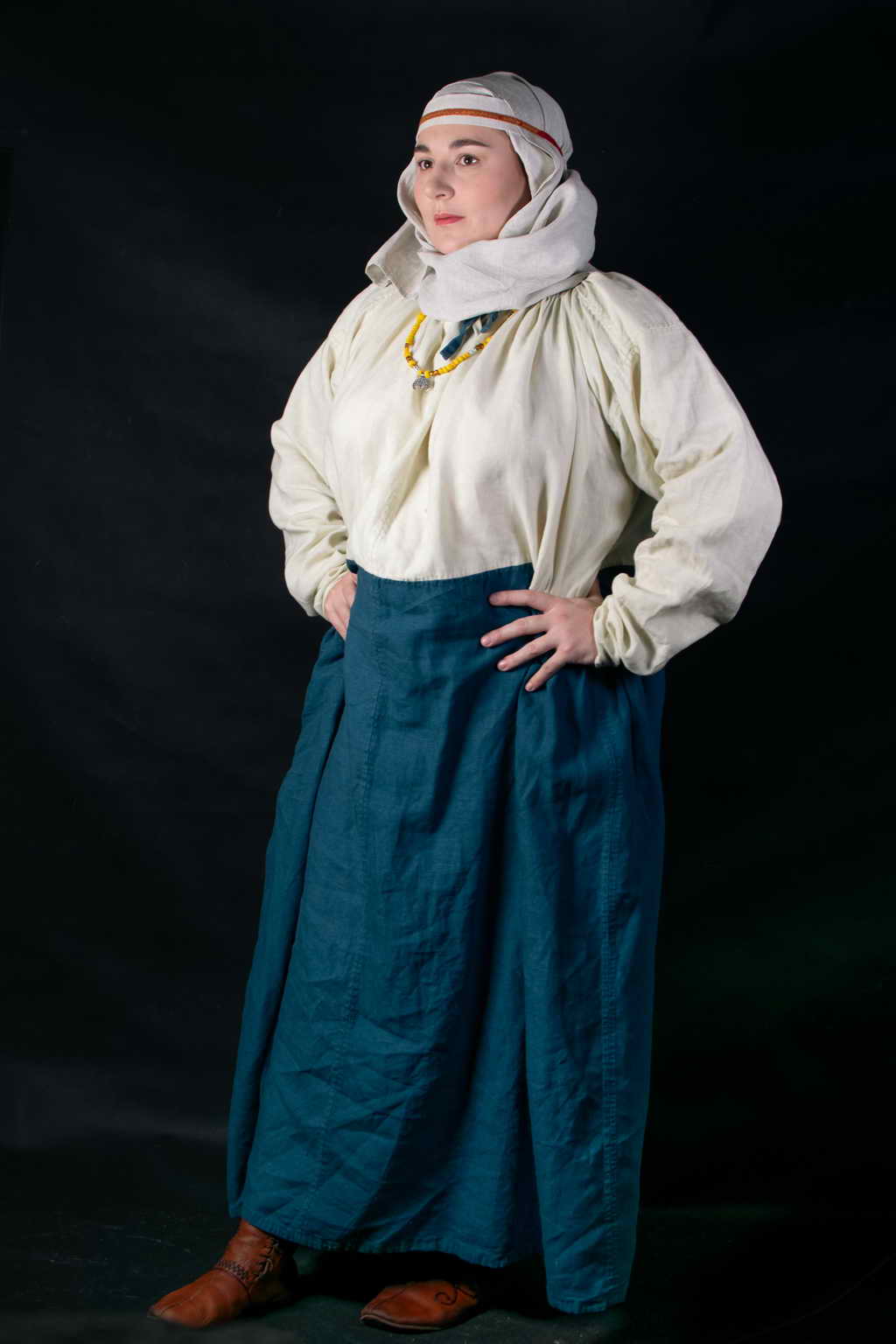
The Gnezdovo dress is one of those finds that immediately sparks the imagination. In the rich grave C-301 lay a Scandinavian woman whose wardrobe could challenge many modern closets: a Chinese-style silk kaftan, a poorly preserved silk dress, and most intriguingly — fragments of a linen dress.
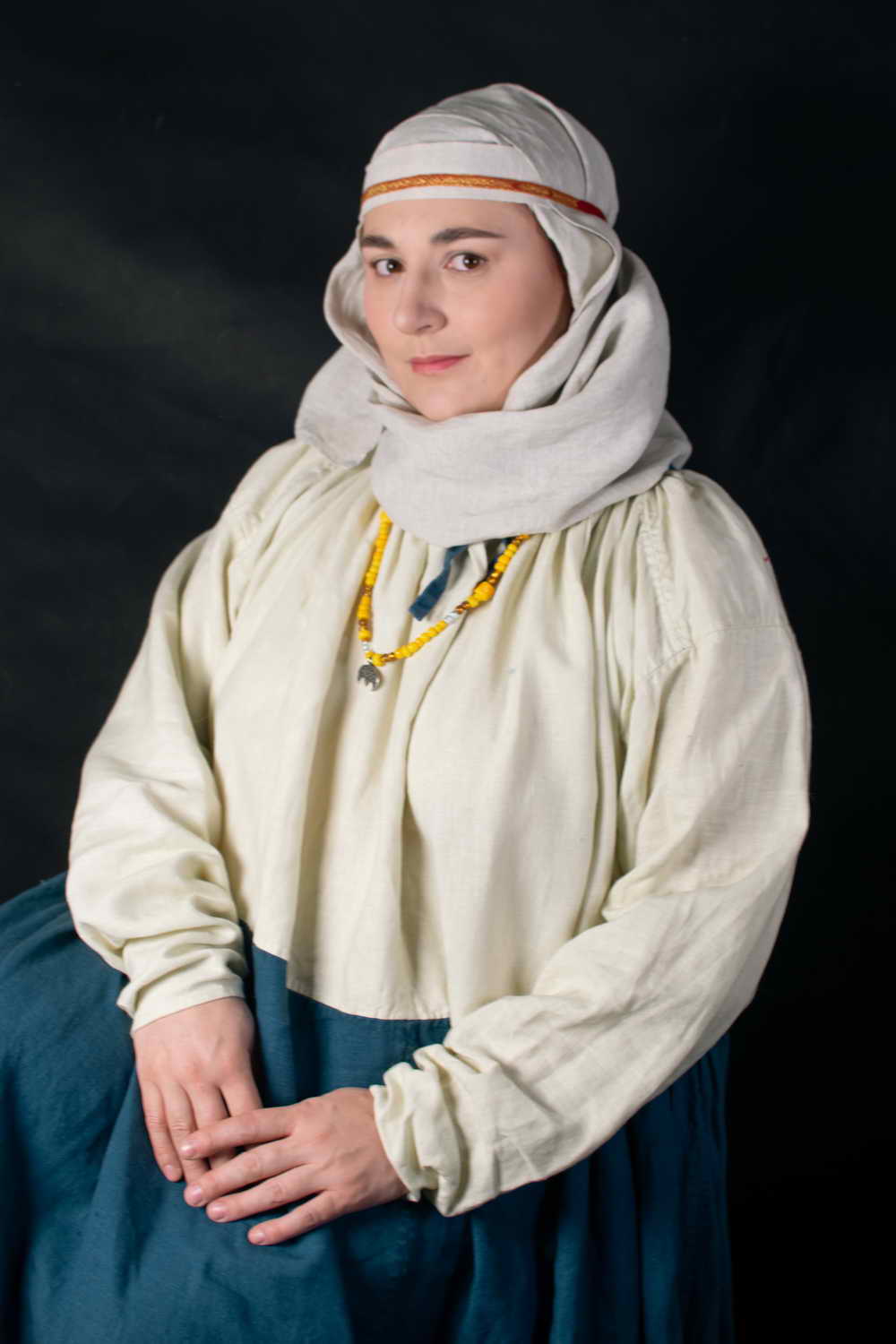
It is this linen garment that lets us peek into everyday life a thousand years ago. Archaeologists found pieces of fine blue linen and heavier undyed linen. Based on these, it is believed to have been a pleated shoulder dress, similar to the one from Pskov. The bodice was likely made of pale linen with a pleated neckline trimmed with a thin blue tape. The sleeves — longer and made of dyed linen — probably rolled ornamentally at the wrists. The skirt likely consisted of four panels of blue linen, densely pleated around the hips.
Ilka made the Gnezdovo dress for herself, and she also pairs it with other elements from the same grave, including a bead necklace inspired by the original glass beads.
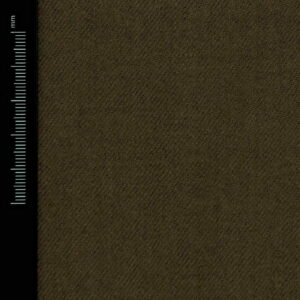
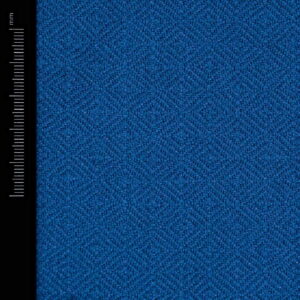
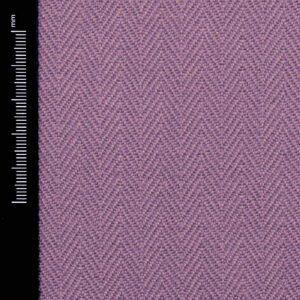
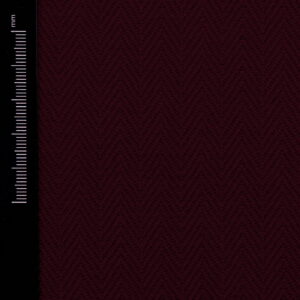
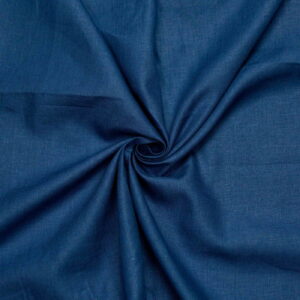
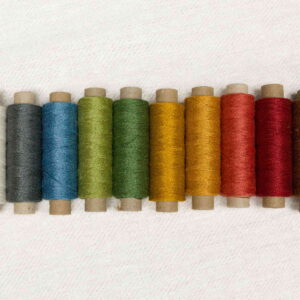
Ilka use for sewing
Żywia using for sewing


A Luxurious Pskov-Style Dress – because women love to shine
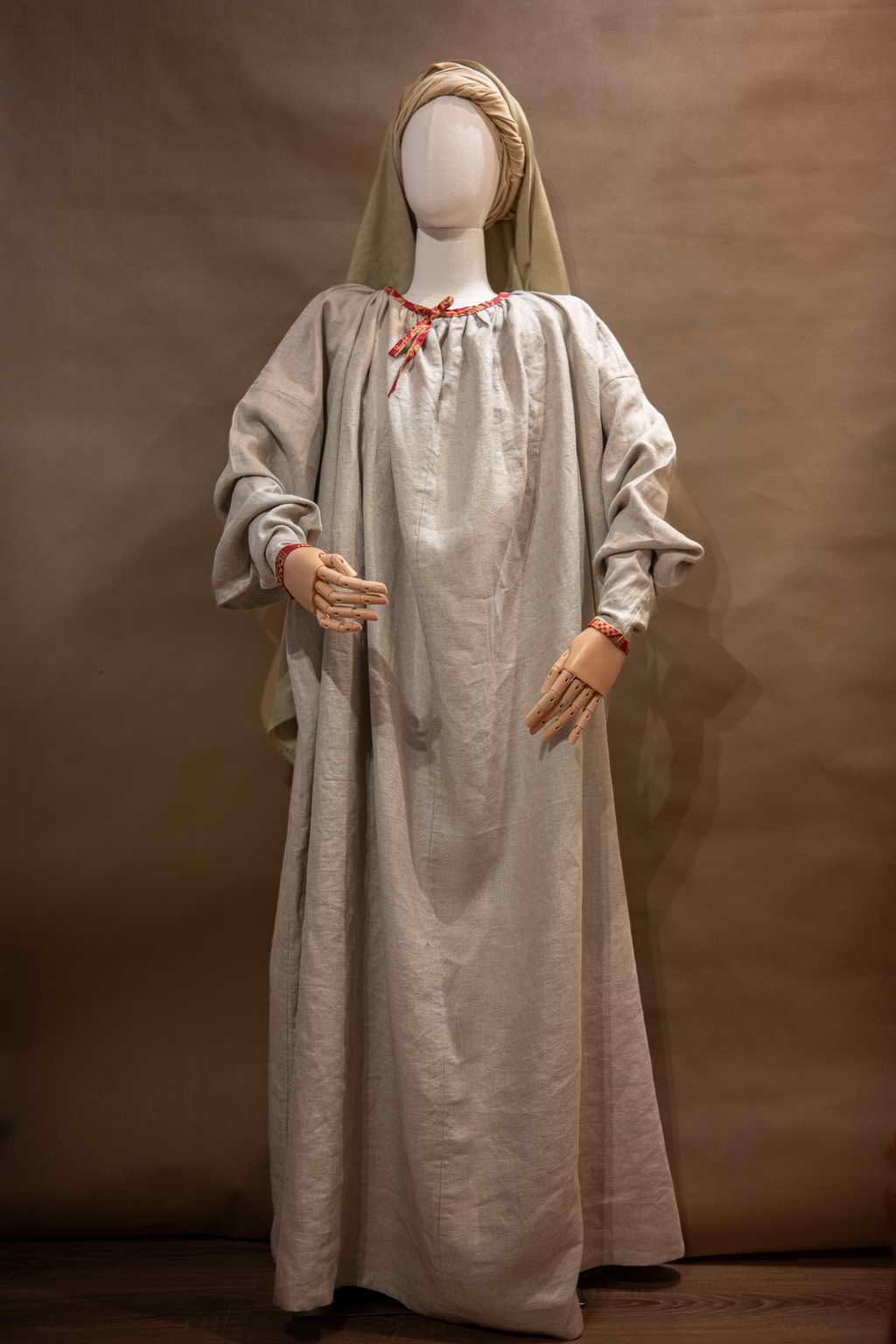
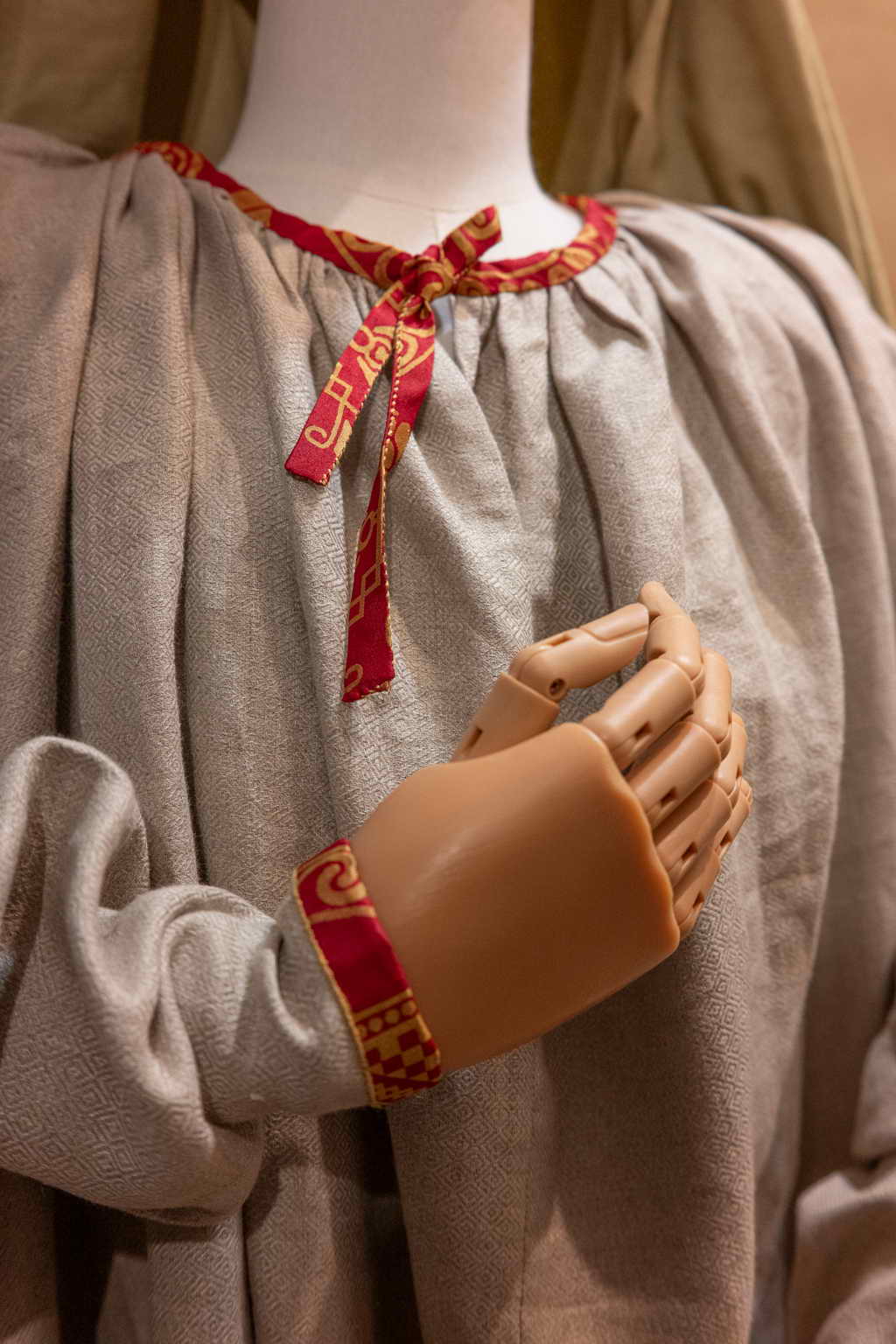
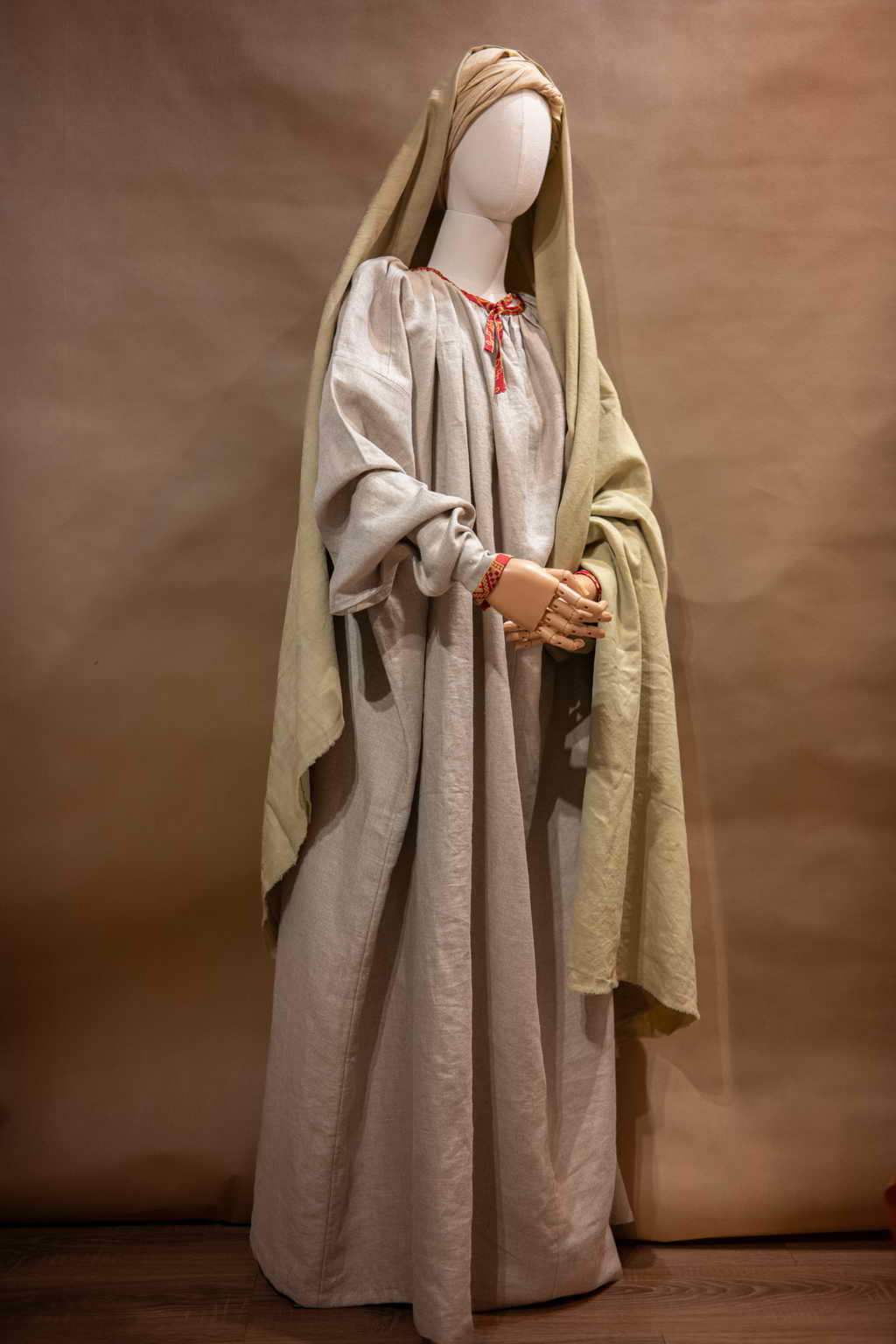
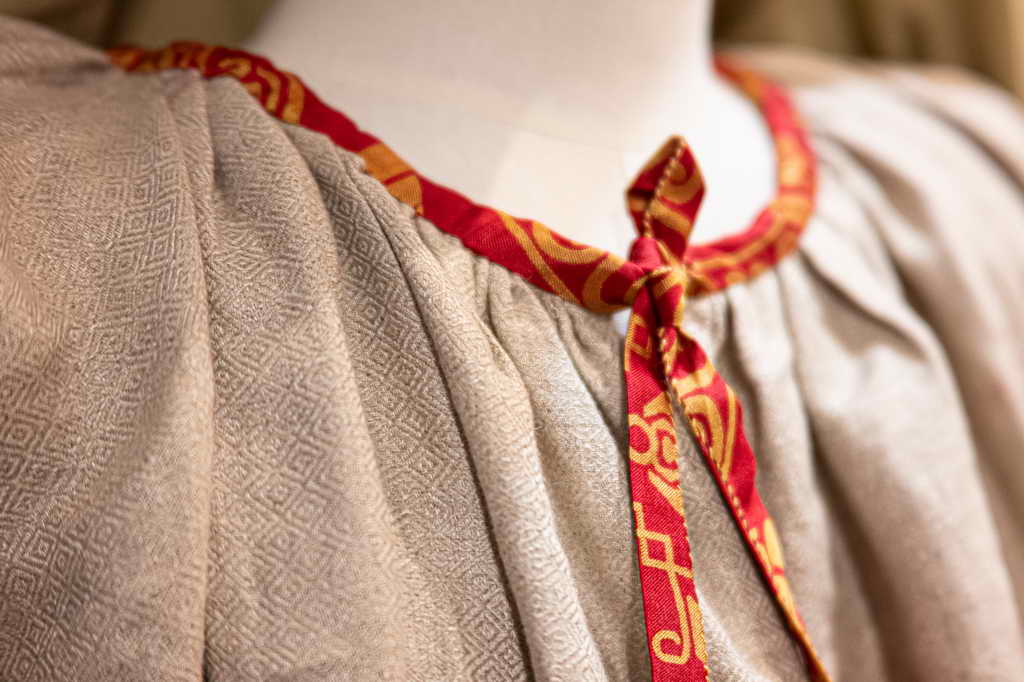
Diamond twill linen isn’t the most common medieval fabric, but traces of it appear in finds such as those from York — making it plausible that a wealthy Scandinavian woman could afford a dress made from such material.
The construction follows the Pskov finds: a gathered neckline and a distinctive cut that showcases the craftsmanship of medieval seamstresses. To the diamond twill linen, Ilka added luxurious touches — silk trims, because if samite was once sewn onto fine linen, modern reconstruction certainly deserves a glimmer of luxury as well. The chosen silk — brocaded and rich — elevates the garment even further.
This is another dress Ilka created for herself, though she is happy to make one on commission.
A Men’s Robe That Makes an Impression
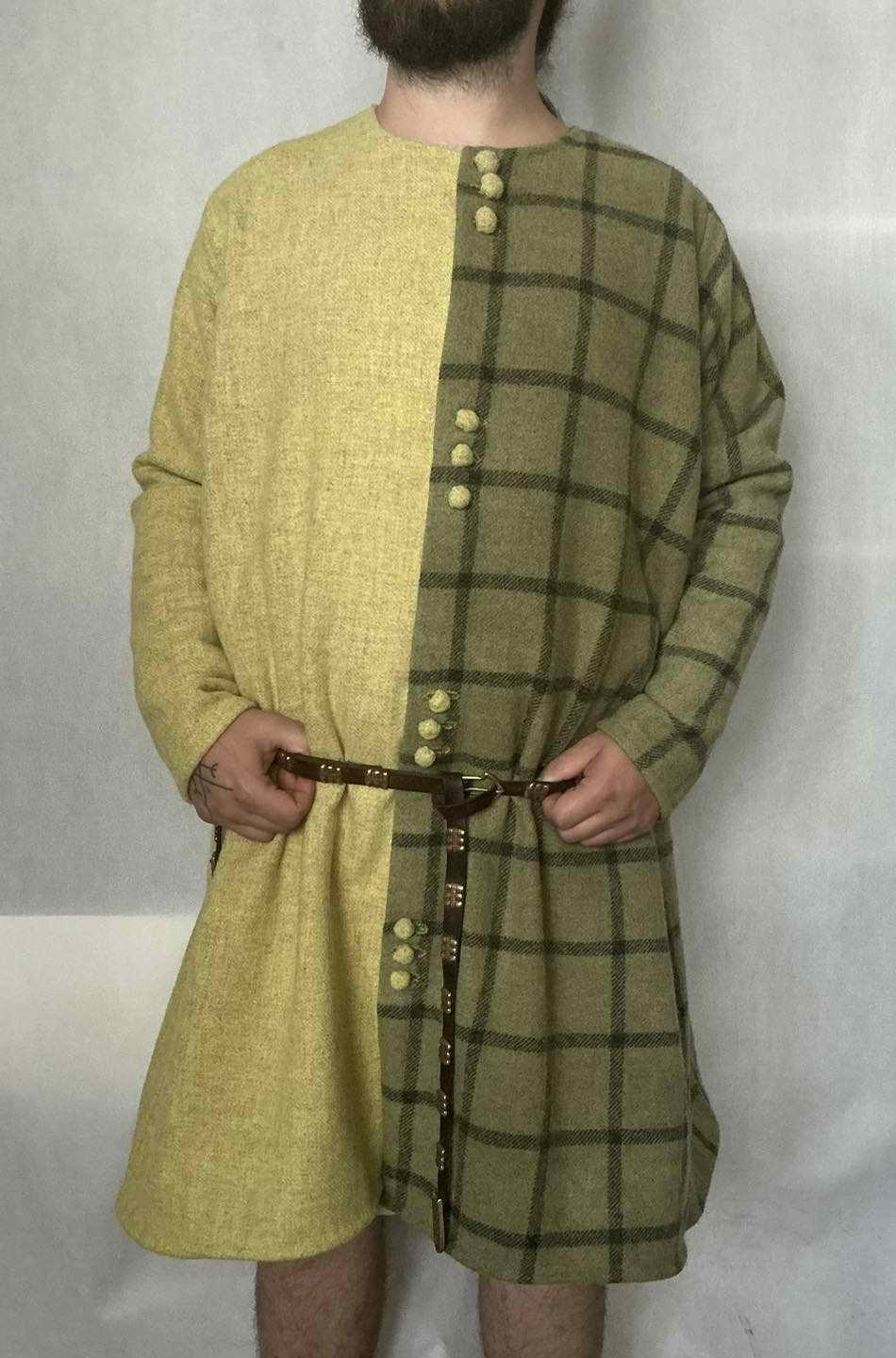
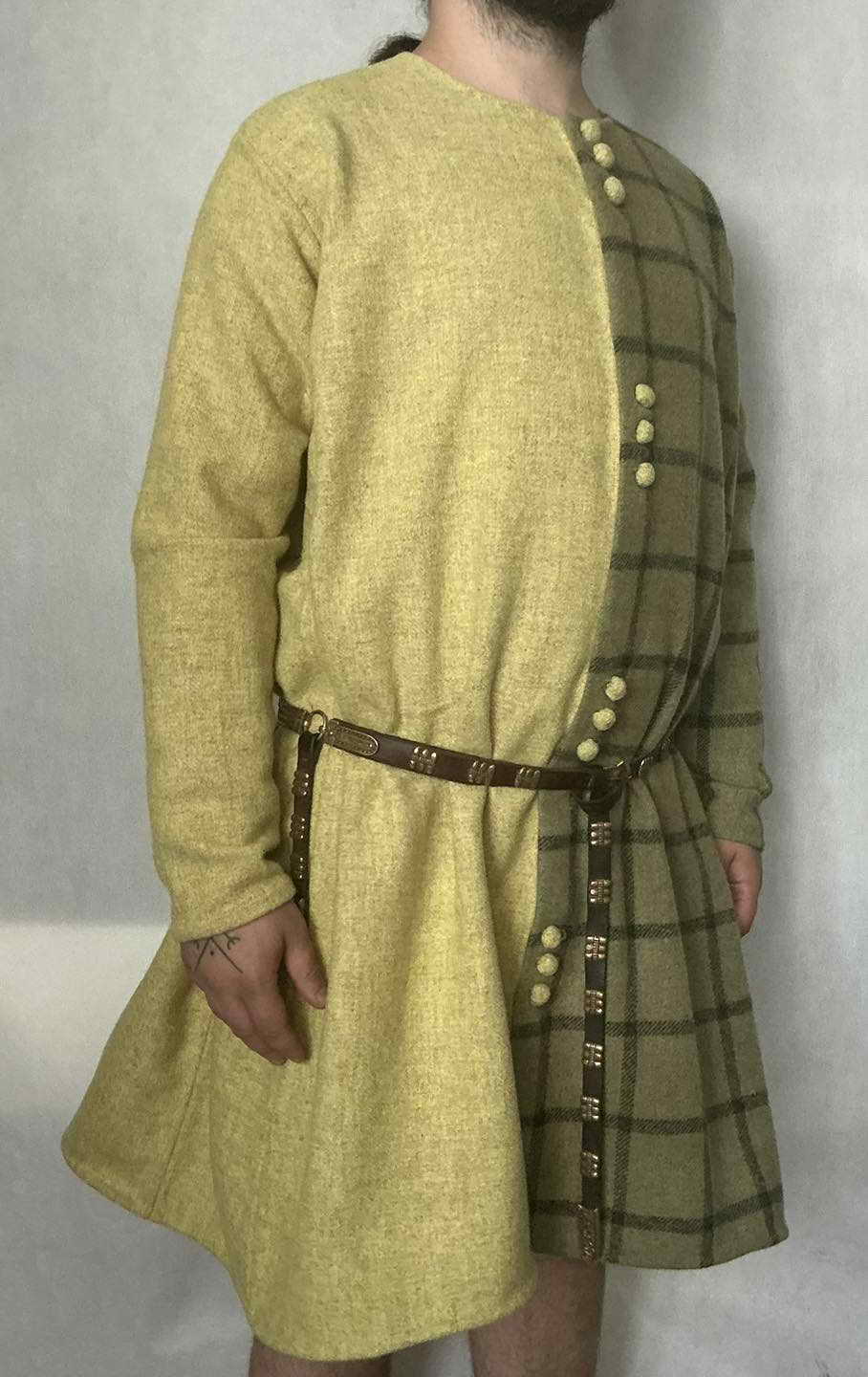
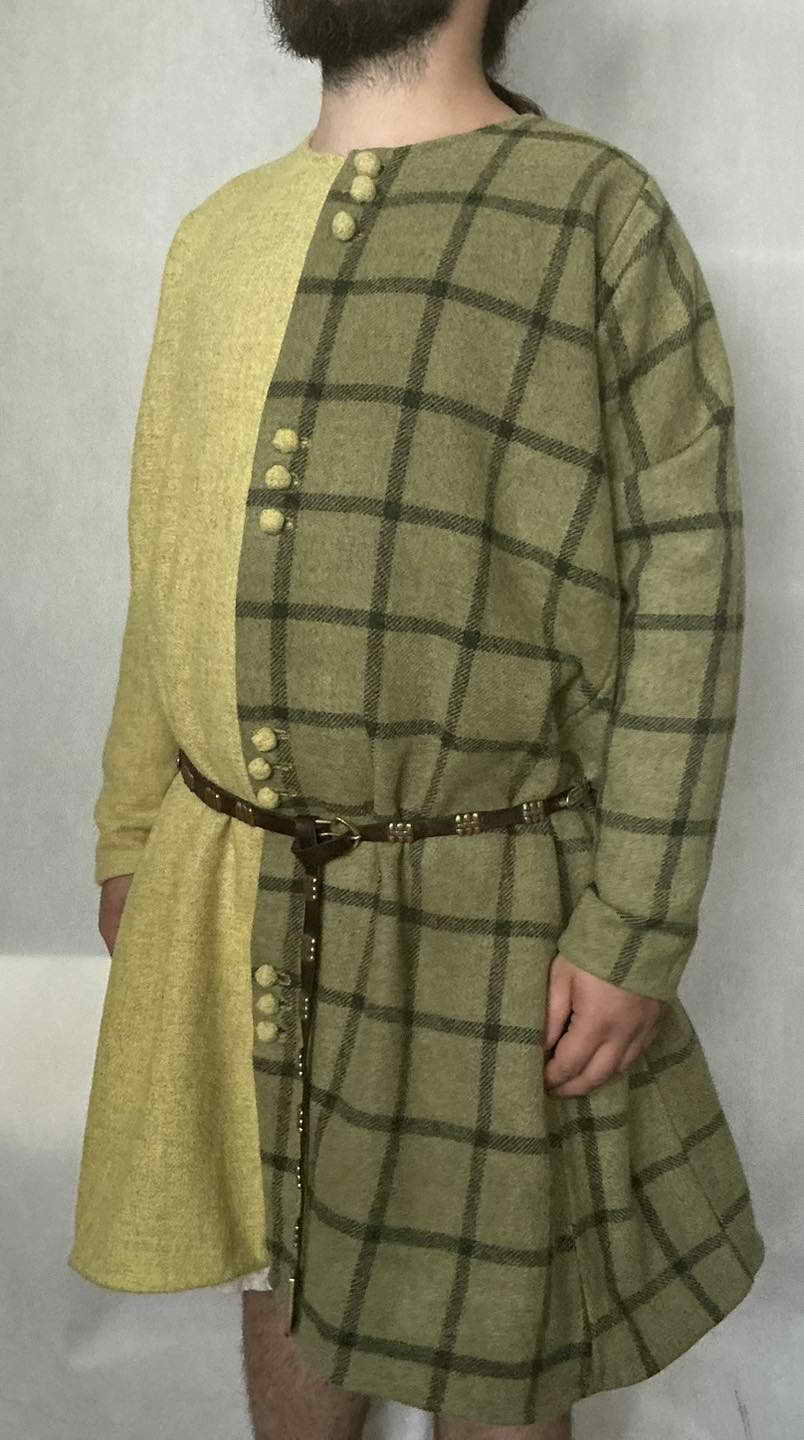
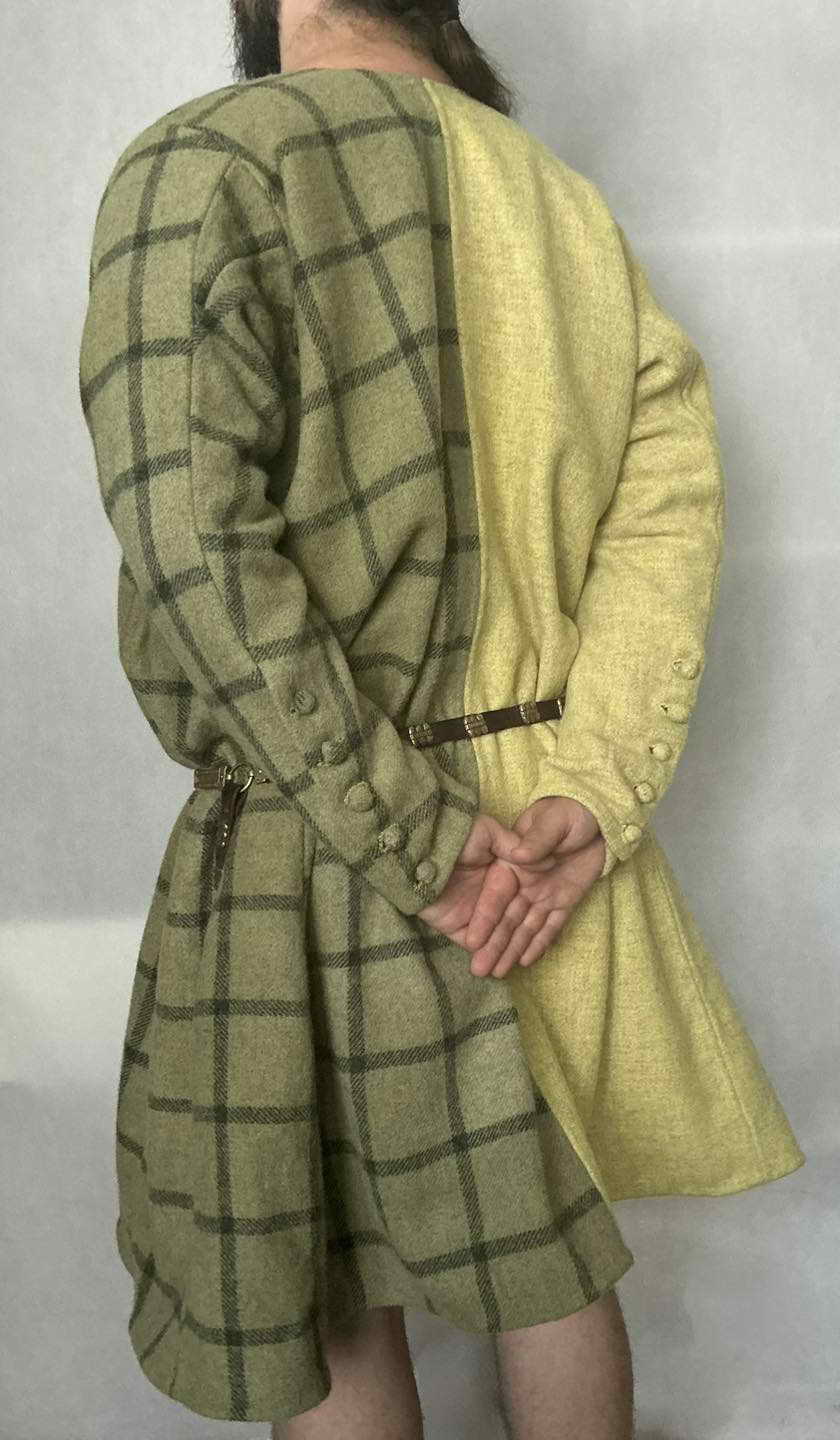
The 15th-century robe is a voluminous, pleated outer garment worn by both men and women, with the male version often being shorter. The robe made by oŻywione was created as mi-parti — one half plain, the other in a checkered pattern — giving it the flair of a late-medieval manuscript illustration.
Both halves were sewn from plant-dyed wool: the lighter side colored with weld and alum, the darker with a touch of iron. Everything is stitched entirely by hand with color-matched thread, and the buttonholes are reinforced with linen patches.
The cut is based on pattern D10150 from Medieval Garments Reconstructed – Norse Clothing Patterns, ensuring the result is both historically grounded and visually striking. It’s a project born from a fascination with craft, materials, and history.
Plant-Dyed Blankets — and More
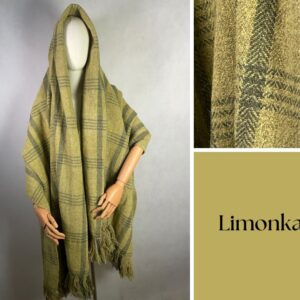
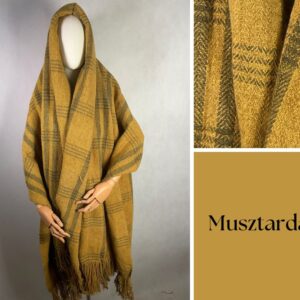
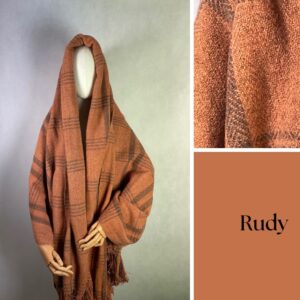
oŻywione doesn’t just sew — she dyes textiles as well, and in a way that makes every fabric look like it came straight out of a historical dyehouse. She also performs plant dyeing for WoolSome customers, including dyeing the wool blankets made from fabrics in the WCHT collection. This gives these items an additional level of authenticity: the colors don’t come from a catalog but arise just as they did centuries ago.
In her own projects, oŻywione often uses fabric dyed entirely by hand. This is not only a beautiful detail but also something that gives each garment its unique character — every shade is one of a kind, every length of fabric tells its own story. This is what makes her clothing stand out not only through craftsmanship but through true, handcrafted exclusivity.
I invite you to explore history with me at the oŻywione Stall!