



 STFCN - Silk Natural Taffeta Chinese






















 Our textiles

One of the main limitations for recreating Roman attire from the Classical period is that the clavi stripes featured on the tunicae of higher class Romans were typically woven into the tunic on the loom. There are various options for striped fabric but none that easily fit a Roman tunic. I would recommend the following color schemes based on extant Roman paintings and statues for a production run:
White base, red stripes, 0.5″ width, spaced 14″ – Roman Equite Tunic
White base, red stripes, 1.25″ width, spaced 14″ – Roman Senator Tunic
Mint Green base, white stripes, 0.5″ width, spaced 14″ – Roman Fabri Laborer
White base, blue stripes, 0.5″ width, spaced 14″ – Roman Scholar’s Tunic
Yellow base, red stripes, 0.5″ width, spaced 14″ – Pompeiian Dandy Tunic
Blue base, red stripes, 0.5″ width, spaced 14″ – Schola Cantorum Tunic

Salve.
I am actually thinking a lot to start this as a big production for coming winter.
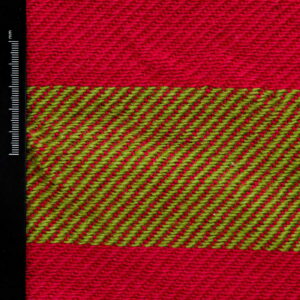
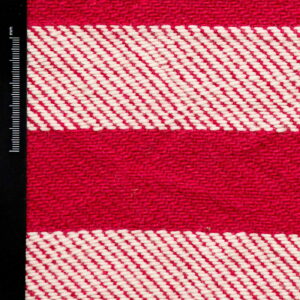
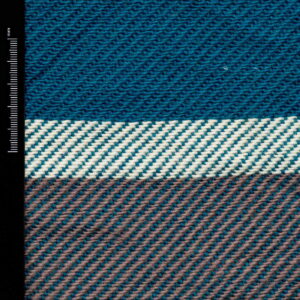
PLAIN WEAVE fabric with woven stripes in so called grosgrain extended tabby technique.
Can you let me know where did you read about the 0,5″ stripes for these yellow and mint based tunics ?
I always thought that these should be around 1,6 ” = ca 4 cm wide
What other colour combinations would you propose, especially for Roman soldiers ? If I would go for ca 160 m warp from a certain background, I would need to make some significant number of colour variants
Cezary
Not necessarily read about but observed. I based my own clavi off of depictions from extant Roman statues and paintings. For the Equestrian clavus, I am fond of the “Equestrian Statue of Octavian Augustus” for it retains the red clavus.
https://ancientrome.ru/art/artworken/img.htm?id=6126
For the Senatorial clavus, this link contains one of my favorite statues, wherein the paint is long gone, but the artist thankfully sculpted the clavus rather than just painting it on. Even without color, you can still clearly see the outline and width of the clavus.
https://commons.wikimedia.org/wiki/File:First_century_CE_togate_torso_bearing_a_17th_century_CE_head_dubbed_Caius_Marius_by_the_Earl_of_Arundel_excavated_in_1613-1614_CE_MH.jpg
Thank you.
I will defenetily do a research around about these widths for Roman clavi tunics, both for Republican and Early Principate times.
What other colour combinations would you propose, especially for Roman soldiers ?
For soldiers, I would limit it to white wool with red / purple clavi. Not a vivid purple like an Emperor would wear, but something between red and purple, as the Murex shellfish dye they used for purple would create varying shades between red and purple that were used as clavi stripes for equites and senators. Something like #7a1f4b.
One other consideration for clavi sizing, some Senators or high ranking military officials would use the Latus Clavus (one single broad stripe in the center of the tunica) rather than the angusticlavia (two narrower stripes, one at each shoulder) used by equites (thin stripe) and Senators (two mid-width stripes at the shoulders.
That makes for three main configurations of clavi:
Single broad stripe in the center of the fabric: Latus clavus
Two broad stripes spaced shoulder width: Angusticlavia lata
Two narrow stripes spaced shoulder width: Angusticlavia equitis
After the Principate and Augustus’ tight cultural control of clothing, use of the clavi stripes became less rigid. While the sumptuary laws remained on the books, it became relatively commonplace for Romans of lower rank to adorn their tunics with clavi of varying colors. This is reflected in artwork of the 2nd century – 3rd century. After the 3rd century, clavi transition from plain stripes of one solid color, to the intricate and heavily ornamented clavi typically associated with the Late Roman Empire and Byzantines.
For color combinations that would be seen between the 1st and 3rd centuries, I have found the following in artwork. I can provide sources if you want:
Depicted as worn by men:
White tunic, red clavi
White tunic, red latus clavus
White tunic, purple/purpura clavi
White tunic, blue clavi (particularly common in Roman Egypt)
Green tunic, white clavi
Yellow tunic, red clavi
Gray tunic, red clavi
Gray tunic, black clavi
Blue tunic, red clavi
Depicted as worn by women:
White tunic, yellow latus clavus
Yellow tunic, blue latus clavus
Red or purple tunic, black latus clavus
Blue tunic, red clavi
Blue tunic, yellow clavi
Yellow tunic, blue clavi
Small oversight on my part:
Correction:
That makes for three main configurations of clavi:
Single broad stripe in the center of the fabric: Tunica latus clavus (plural lati clavi)
Two broad stripes spaced shoulder width: Tunica Laticlavia
Two narrow stripes spaced shoulder width: Tunica Angusticlavia