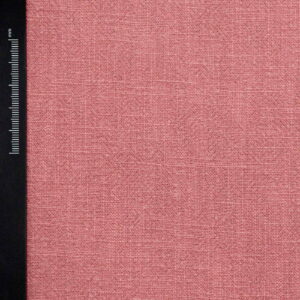
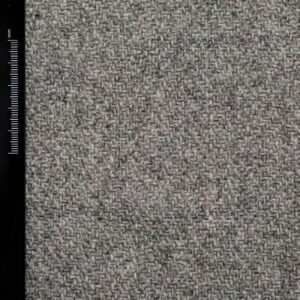
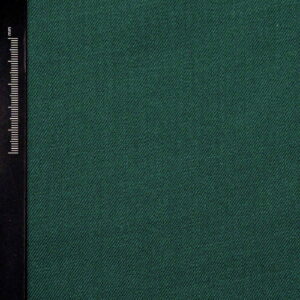
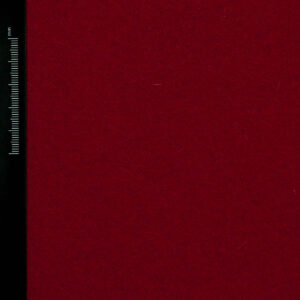
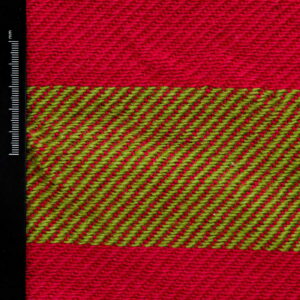
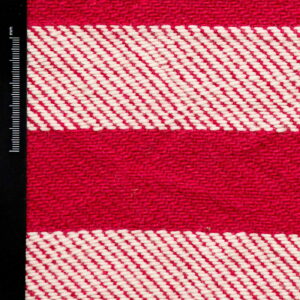
In "Textiles and Clothing, c.1150-1450: Medieval Finds from Museum of London Excavations" by Francis Grew and Margrethe de Neergaard, they reference several examples of fabrics that combine different ... Czytaj dalej...
Its something between clasic wool fabrics and silk fabrics on period rich scale. It has a smooth shine and apears in sources in different names, for example "haras"
I think it could be useful to had a GOTS or OEKO-TEX certified wool (maybe in thin and/or medium weight) for people who try to be respectful towards the environment in their fabric consumption. I saw ... Czytaj dalej...
The Falkirk tartan is what is known as
a 2-over-2 weft-chevron twill.
Undyed light brown and dark brown checked pattern from the 3rd century.
https://falkirklocalhistory.club/wp-content/upload... Czytaj dalej...
Since there are already natural dyes and yarn, so why not sheep fleece from primitive breeds such as Soay, Icelandic, Shetland, Manx Loaghtan, Wrzosówka, or Świniarka. And I think it would be better... Czytaj dalej...
Twill is great in many applications, but sometimes the stability and resistant to fraying that plain weave gives you is just what's needed! Having access to more plain weaves, in more colors (and undy... Czytaj dalej...
The fabrics from the salt mines are mainly woollen and some are of extraordinarily fine quality. These woollens were woven on warp-weighted looms that could produce not only a plain tabby but more com... Czytaj dalej...
The raw material was not specified, but the warp (O) and weft (W) fibers - compared to other analyzes - belong to a coarser grade (0.039 [O] and 0.042 mm [W]), which guaranteed obtaining a "stronger" ... Czytaj dalej...





 STFCN - Jedwab Naturalny Tafta Chińska